TL;DR
Beltline Calgary homes for sale are mostly concrete condos, plus a few lofts and townhomes. They sit in a walkable inner-city community just south of downtown. The Beltline suits professionals, downsizers, and investors who want a car-optional lifestyle. Right now, the condo segment leans in the buyer's favour, so patience pays.
Where Is the Beltline, and Why Do Buyers Keep Choosing It?
The Beltline sits directly south of Calgary's downtown core, and 17th Avenue SW runs straight through its heart. From most buildings, you can walk to the office towers to the north. Alternatively, you can drift over to Mission for brunch, or step onto one of the busiest restaurant strips in the province. That location is the whole pitch. When someone tells me they want to buy home Beltline Calgary, they mean something specific. They want to live where things are already happening, not a twenty-minute drive away.
The draw here is simple and durable. Walkability, transit access, and an energy that most Calgary neighbourhoods cannot match all come standard. As a result, demand in this pocket tends to hold up even when the wider market wobbles. For the official boundaries and community details, the City of Calgary's Beltline community profile is a good starting point. If you are weighing the Beltline against other central options, my guide to Calgary inner city homes for sale compares the core neighbourhoods.
What Kind of Homes Are for Sale in the Beltline?
The Beltline is a condo neighbourhood first, and everything else second. Still, before you fall for a specific unit, it helps to know the full range of buildings you will choose from.
Concrete Towers and Condo Apartments
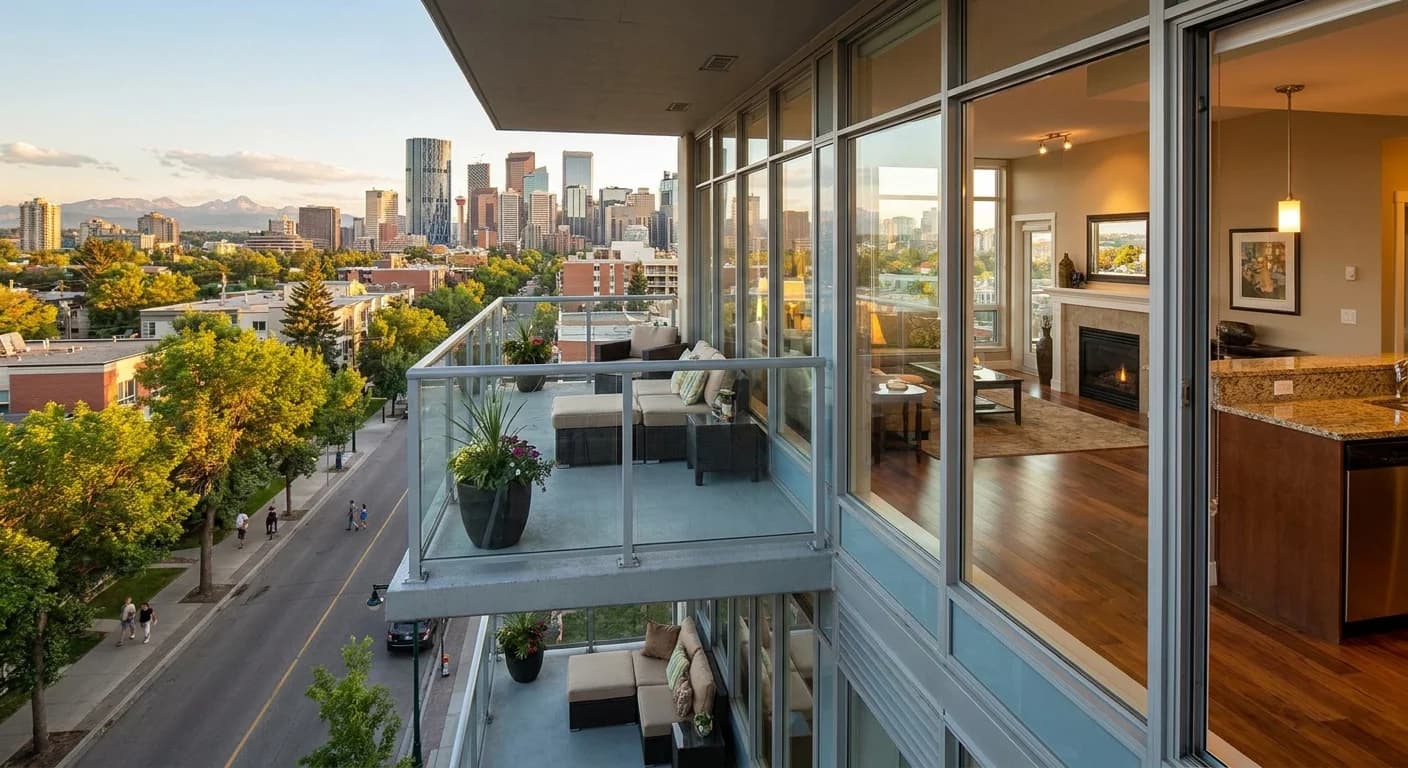
Most beltline condos calgary buyers look at sit inside mid-rise and high-rise concrete towers. These vary widely. On one end, you find compact studios and one-bedrooms that investors love for their rentability. On the other end, you find large two-bedroom and penthouse units with private terraces and skyline views. Notably, those top units compete directly with anything downtown. Newer amenity-rich towers keep arriving too. In particular, the Culture and Entertainment district on the east side has added modern residential buildings in recent years. Concrete construction also matters here. Overall, it means better sound insulation and a more solid feel than older wood-frame stock, so buyers in this segment tend to prioritize it.
Lofts, Boutique Buildings, and the Rare Townhome
Beyond the towers, the Beltline hides some real character. For example, you will find converted lofts with exposed brick and tall ceilings. You will also find small boutique buildings with only a handful of units. A scattering of townhomes and row homes rounds out the mix for buyers who want a front door at street level. When you scan beltline property listings, these character options move quickly, because there are fewer of them. Detached houses, by contrast, are rare in the Beltline. If a private yard matters to you above all else, this is probably not your neighbourhood, and that is worth knowing early.
What Is Living in the Beltline Actually Like?
Day to day, the Beltline feels like the most urban part of Calgary, because it is. 17th Avenue SW gives you restaurants, patios, coffee shops, and boutiques within a short walk. Meanwhile, Central Memorial Park offers a genuine green break in the middle of the density. You will also find grocery stores, gyms, salons, and dog-friendly blocks woven throughout. In summer, the sidewalks fill with patio crowds and festival foot traffic. Certain buyers crave exactly that kind of energy on their doorstep. Commutes stay short, the cycling infrastructure works well, and many residents go car-light or car-free by choice.
Still, I always give my clients the honest version. This is a dense, lively neighbourhood, so some blocks carry real street noise, especially near the bars on a Friday night. Parking can feel tight, and not every building includes a stall, so confirm that early. My advice stays the same. Specifically, tour a unit at different times of day before you commit. A condo that feels perfect on a quiet Tuesday afternoon can feel like a different address on a busy weekend evening. As a result, you want to know which version you are buying.
Who Should Buy in the Beltline (and Who Shouldn't)?
The Beltline rewards a specific kind of buyer. In my experience, it fits four groups well:
- Young professionals and executives who want to walk to work and to dinner.
- Downsizers ready to trade a suburban house and its upkeep for a low-maintenance condo.
- Investors who want a core location with steady rental demand.
- Out-of-province buyers relocating to Calgary who use the Beltline as a landing pad while they learn the city.
On the other hand, families who need a yard, a driveway, and nearby schools usually find the Beltline a tough fit. That mismatch is nobody's fault; it comes down to needs. When a family comes to me set on inner-city living but wanting more space, I often point them toward other central communities instead. Ultimately, buying well starts with honesty about how you live. For some buyers, the Beltline is a confident yes; for others, it is a gentle no.
What Is the Beltline Market Like for Buyers Right Now?
My read on current conditions is straightforward. After several strong years, Calgary's condo and apartment segment has cooled into more balanced, buyer-leaning territory, and the Beltline reflects that shift. In practice, that means more choice on the market and more room to negotiate. Moreover, it means far less of the frantic bidding-war pressure that defined the boom. Prices in the condo segment have softened modestly from their peak. Still, they remain well above where they sat in the late 2010s, so this is a rebalancing rather than a crash. For the current, authoritative numbers, I point clients to the Calgary Real Estate Board's monthly market reports instead of relying on headlines.
What does this mean for you as a buyer? It means opportunity paired with the need for diligence. You can take your time, compare several units, and negotiate from a position of strength. Consequently, buying here feels different than it did a few years ago. For a deeper look at the segment, my breakdown of what buyers should know about Calgary's condo market goes further than I can here.
How to Buy a Beltline Condo the Smart Way
Once you decide the Beltline fits, the process is where good decisions are won or lost. First, get your financing sorted, because a firm pre-approval tells you your real budget and strengthens your offer. Next, and people underestimate this, prioritize the building over the individual unit. A gorgeous condo inside a poorly run building spells trouble later. By contrast, an ordinary unit in a well-managed building often makes the smarter buy. Additionally, think about price positioning. Beltline condos generally cost less per square foot than a detached inner-city house. As a result, they open an accessible path into a premium location. That value gap is part of why beltline calgary homes for sale attract such a broad mix of buyers. For the full step-by-step, my complete 2026 guide to buying a home in Calgary walks through financing, offers, and closing.
Read the Condo Documents Before You Buy
This is the step I refuse to let clients skip. Before you remove conditions, review the condo documents carefully. In particular, read the reserve fund study, the financial statements, the bylaws, and the board meeting minutes. Watch for any hint of upcoming special assessments. Those pages tell you whether the building sits on solid financial ground or heads toward a large repair bill you did not see coming.
Condo fees deserve the same scrutiny. For example, a suspiciously low fee can signal an underfunded reserve, while a higher fee sometimes buys real peace of mind. This is also where a good beltline real estate agent earns their keep. After all, reading these documents well takes real experience. Ultimately, any licensed agent or beltline calgary realtor you hire should walk you through the red flags. For the rules behind those documents, the Government of Alberta's condominium information for buyers and owners explains what a healthy reserve fund and proper disclosure look like.
Beltline Buying Questions I Hear Most
Are Beltline condos a good investment?
They can be, provided you buy the right unit in the right building, since the core location supports steady rental demand from downtown workers and students. However, returns depend heavily on the building's health, the condo fees, and the price you pay, so choose carefully rather than chasing the cheapest listing.
Do you need a car to live in the Beltline?
No, and that freedom is one of the neighbourhood's biggest advantages, because many residents walk, cycle, or take transit for daily life. Still, you should confirm whether your specific building includes a parking stall if you plan to keep a vehicle.
How much are condo fees in the Beltline?
Fees vary widely by building, unit size, and the amenities on offer, so I cannot quote a single honest number. Buildings with pools, concierge service, and large common areas cost more to run, so what the fee covers matters more than the fee alone.