TL;DR
Living in Rosemont Calgary offers mid-century residential character, expansive green space, and convenient inner-city access. Bordering Confederation Park, this mature northwest enclave provides quiet streets, generous lots, strong community ties, and lasting appeal for families and professionals seeking an established neighbourhood close to downtown.
Is Living in Rosemont Calgary Right for You?
Rosemont suits buyers who want a quiet, established community without moving far from central Calgary. Its detached homes, mature landscape, and direct park access create a residential experience that feels private yet connected.
Rosemont covers approximately 0.5 square kilometres in Calgary’s northwest. The land was annexed in 1910, although residential development began in 1958. Most original homes reflect the practical postwar architecture of the following decade.
The community contains approximately 445 assessed properties. Typical lots have 50-foot frontages and average about 578 square metres. That scale gives homeowners meaningful yard space, renovation potential, and separation from neighbouring properties.
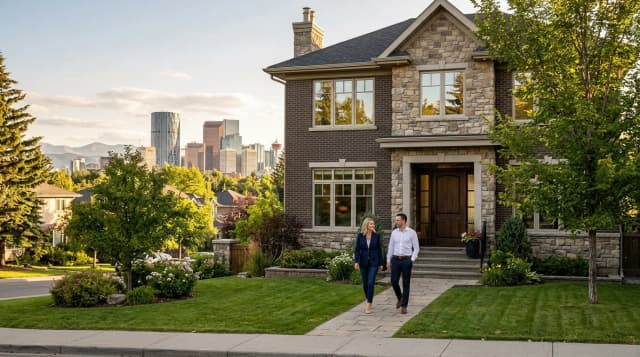
The City’s Rosemont profile places the average construction year around 1966. Bungalows, split-level homes, and updated detached residences remain central to the streetscape. Select custom infills introduce modern design without overwhelming the original pattern.
I find Rosemont especially compelling for buyers who value calm surroundings over commercial intensity. There is little disruptive retail activity inside the enclave. Instead, its boundaries connect residents to major roads, services, and nearby shopping districts.
Owners can reach central employment and education hubs while returning to tree-lined residential streets, creating an intimate inner-city pocket with a strong sense of permanence.
- Best suited to: Families, professionals, downsizers, and long-term detached-home buyers.
- Defining qualities: Generous lots, mature trees, park access, and low-rise architecture.
- Primary trade-off: Limited housing inventory and few commercial services within the community itself.
Where Is It Best to Live in Calgary for Mature Green Space?
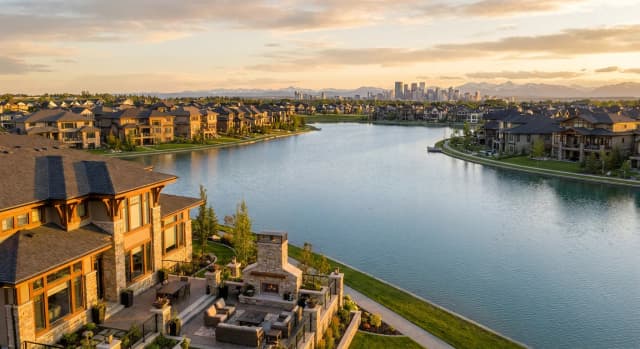
Inner-northwest communities beside regional parks rank among Calgary’s strongest choices for mature green living. Rosemont stands out because Confederation Park is part of its daily landscape, not an amenity that requires a drive.
This rosemont neighborhood guide places the community within Calgary’s northwest character belt. Cambrian Heights, Capitol Hill, Collingwood, and Rosemont share mature vegetation, established infrastructure, and a predominantly low-rise residential form.
Rosemont’s compact footprint gives it a more secluded atmosphere than many larger communities. Local streets serve residents rather than commercial traffic. Confederation Park forms a broad green southern edge.
For my clients, living in Rosemont Calgary often means choosing substance over status. Upper Mount Royal and Pump Hill carry greater prestige and more luxury inventory. Newer suburbs offer contemporary floor plans, but they cannot replicate decades of tree growth or established parkland.
Rosemont occupies an accessible upper-middle position between those alternatives. Its assessed values sit above Calgary’s average, yet its identity remains understated, defined by setting, lot quality, and ownership stability.
That balance supports its reputation as a rosemont family community. Parents gain outdoor space and quieter streets. Professionals retain practical access to central Calgary. Long-term owners benefit from a neighbourhood whose appeal is difficult to reproduce through new construction.
Buyers should still assess individual locations carefully. Homes backing onto parkland may command different attention than properties beside arterial roads. Renovation quality, lot orientation, and redevelopment potential also shape value within this small enclave.
Parks and Year-Round Outdoor Recreation
Confederation Park is the defining feature among rosemont parks. It follows the community’s southern boundary and serves as an extension of the neighbourhood’s residential environment.
The park’s pathways support walking, running, cycling, and connections into surrounding northwest communities. Its rolling natural landscape feels distinct from a conventional rectangular field. Mature vegetation, open lawns, and a duck pond create varied scenery throughout the year.
During winter, seasonal cross-country skiing adds another layer of recreation. Residents can move from quiet residential streets into a substantial green corridor within minutes. This immediate access encourages outdoor activity without requiring extensive planning or driving.
Rosemont Community Hall strengthens that park-oriented lifestyle. Located at 2807 10 Street NW, the updated facility opens directly toward Confederation Park. Its position allows indoor programs and private events to extend naturally onto the surrounding grounds.
The building offers several rooms for community and private use. The main hall can accommodate up to 120 people and includes a small stage, catering-style kitchen, and accessible entry. A smaller lower-level room faces the park and works well for youth activities and family gatherings.
The hall provides a recognizable civic centre for classes, celebrations, meetings, and volunteer initiatives. That social infrastructure matters in an enclave with a modest population.
Together, the park and hall support a four-season lifestyle:
- Pathway walks, running, and cycling during warmer months
- Nature observation around the pond and rolling landscape
- Seasonal cross-country skiing in winter
- Community classes, events, and indoor recreation
- Family gatherings with immediate access to outdoor space
Schools and Youth Development in the Community
Rosemont Elementary anchors the local educational experience for younger students. Its neighbourhood setting can simplify school routines while helping children form friendships close to home.
Older students access designated junior high and high school options in nearby communities. Available placements depend on current attendance boundaries, grade level, and program choice. Families can consider public and separate school systems, including specialized programs offered elsewhere in northwest Calgary.
Parents should confirm designations directly with the relevant school board before purchasing. Boundaries and program availability can change, while one property may have different designated schools for separate grade levels.
The broader rosemont calgary schools landscape also includes community-based learning. The community program listings identify youth initiatives that combine physical activity, outdoor exploration, and leadership development.
Common Digs focuses on childhood learning through outdoor engagement. Rosemont’s park setting gives that experiential model a fitting environment. Children can build confidence and curiosity through direct interaction with natural spaces.
The LDK Foundation offers karate, fitness, and leadership training at the community hall. Its programming combines movement with discipline, respect, and personal responsibility. These options expand youth development beyond the classroom.
For families, the value lies in the complete setting. A rosemont family community provides safe gathering places, structured activities, and outdoor spaces where children develop independence alongside local schooling.
In my work with family buyers, I recommend evaluating the entire educational routine: school designation, transit, extracurricular schedules, and daily neighbourhood use. Rosemont performs well when outdoor access and community involvement are priorities.
Everyday Connectivity, Transit, and Local Services
Rosemont is residential, but not isolated. Major roads around the enclave connect residents with central Calgary, post-secondary institutions, healthcare, and established retail districts.
Fourteenth Street NW forms the western boundary, while Northmount Drive runs along the north. These routes provide practical connections toward downtown and other northwest destinations. Transit service along surrounding corridors gives residents alternatives to driving.
Downtown Calgary is a short inner-city commute. SAIT sits to the south, while the University of Calgary lies west of the community. Travel time depends on traffic, weather, transit schedules, and the starting point within Rosemont.
Rosemont calgary amenities are concentrated around the neighbourhood rather than inside it. This helps preserve quiet residential streets while keeping daily needs within reasonable reach.
- North Hill Centre: Retail, groceries, personal services, and connections near SAIT.
- Brentwood: Shopping, dining, transit, and services near the university district.
- Neighbouring corridors: Independent businesses, professional services, and healthcare providers.
- Central Calgary: Employment, cultural venues, hospitals, and specialized services.
This arrangement suits residents who value separation between home and commerce, offering convenient access from a calm residential base rather than a dense commercial corridor.
Buyers who rely heavily on transit should review nearby routes for their specific commute. Those who drive will value the arterial network, although homes closest to major roads may experience more traffic exposure.
Community Safety, Demographics, and Neighbourhood Well-Being
Rosemont’s well-being indicators reflect a stable and established population. The community combines comparatively low reported disorder with above-average household income and strong levels of homeownership.
In 2025, Rosemont had a disorder rate of 38.1 events per 1,000 residents. Calgary’s citywide rate was 59.1 per 1,000. No urban community is free from risk, but that comparison supports Rosemont’s reputation for residential calm.
The median household income is approximately $107,000, compared with about $98,000 across Calgary. Only 14% of Rosemont households spend 30% or more of their income on shelter. The comparable citywide share is 23%.
Household composition also reinforces the neighbourhood’s mature profile. Approximately 85% of census families are couple families. Residents aged 40 to 64 represent a substantial part of the population, while seniors have a larger presence than they do citywide.
These figures do not guarantee an individual household’s experience. However, they suggest lower housing stress and a resident base with significant long-term ties to the community.
The rosemont family community benefits from that continuity. Established owners often possess detailed knowledge of local streets, park conditions, and community concerns. Informal neighbour connections can complement formal programs offered through the association.
I advise buyers to examine both statistics and the street itself. Visit at different times, observe traffic patterns, and consider lighting or park access. Local conditions can vary within even the smallest neighbourhood.
Standard urban precautions still apply. Residents should secure vehicles, protect valuables, and remain attentive after dark. Rosemont’s data are reassuring, but practical awareness remains part of responsible city living.
What Are the Expected House Prices in Calgary for 2026?
Calgary’s 2026 detached market is expected to remain relatively stable as conditions move toward balance. Apartments and row homes face greater price pressure, while established single-family properties should show more resilience.
The CREB 2026 forecast describes a market shaped by steadier demand and rising supply. Approximately 26,000 homes were under construction, with much of that supply concentrated in multi-family housing.
That distinction matters in Rosemont. Detached houses dominate the community, and comparable inner-city lots cannot be produced at scale. Park adjacency, mature trees, and proximity to central institutions also support long-term desirability.
Rosemont’s average assessed property value is roughly $930,000. Assessment-roll averages increased by about 25.8% over three years, rising from approximately $746,507 to $938,914. Assessments are not sale prices, but they illustrate the community’s recent value trajectory.
Redevelopment remains measured. Since 2024, municipal data show 56 permits representing about $6.4 million in investment. These included 20 new construction projects and 10 demolitions. The pattern suggests selective custom rebuilding rather than abrupt high-density transformation.
Buyers should expect substantial variation between original homes, fully renovated properties, and new luxury infills. Lot position also matters. Park-facing or exceptionally private sites may attract attention beyond what neighbourhood averages imply.
For long-term owners, Rosemont offers financial resilience rooted in scarcity and lifestyle value, reducing reliance on speculative demand while remaining subject to broader market cycles.
My advice is to separate citywide headlines from property-specific fundamentals. Condition, design, lot quality, and location within the enclave will remain decisive. In a balanced market, careful due diligence and disciplined pricing become even more important.